If you plan to spend part of the year in Steamboat, your second home needs to do more than look beautiful. It needs to handle deep winter weather, long stretches of vacancy, and the everyday realities of mountain ownership without creating extra stress. The good news is that with the right design choices, you can create a home that feels warm and welcoming when you arrive and stays protected when you are away. Let’s dive in.
Why lock-and-leave matters in Steamboat
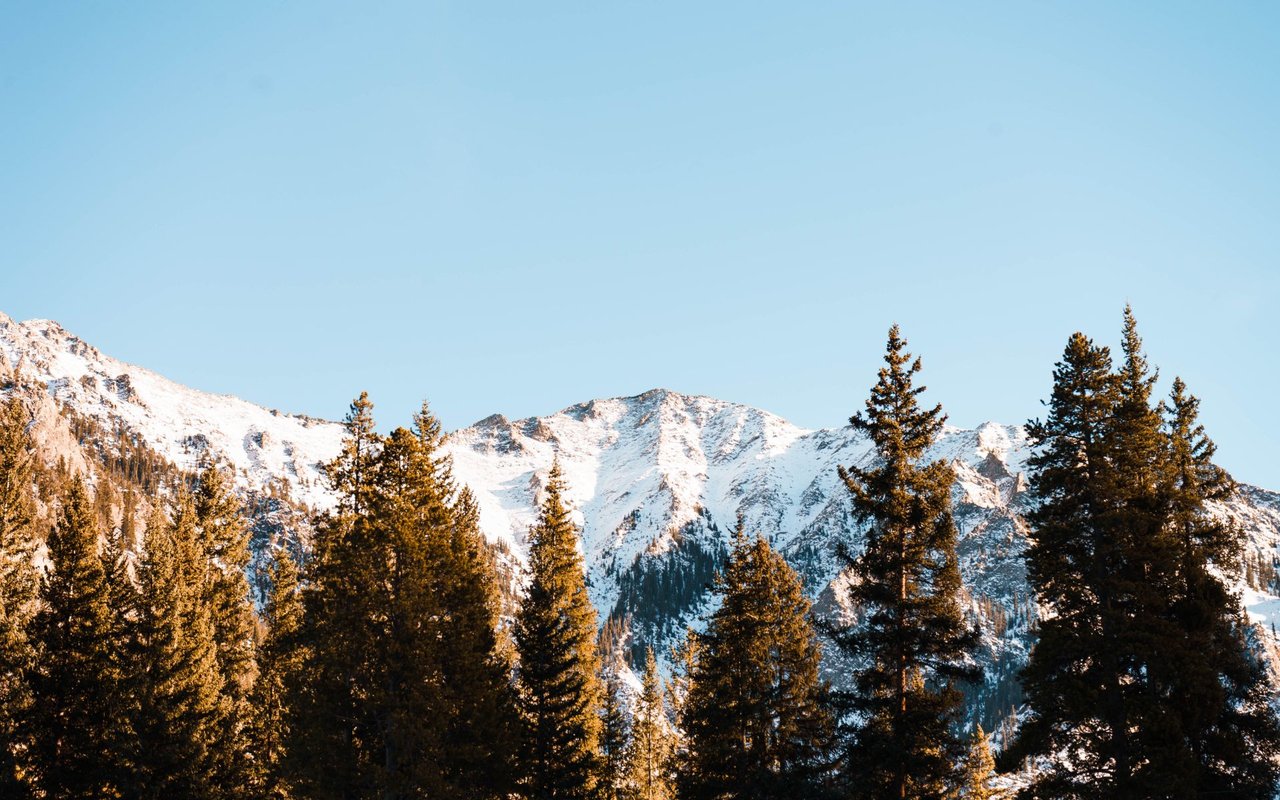
Steamboat Springs is a natural fit for lock-and-leave living. According to NOAA climate normals for the Steamboat Springs station, the area averages about 184.5 inches of snowfall each year, with especially heavy snow in December, January, and February.
That climate changes the design brief. When winter lows can drop into the single digits, a second home should be built and organized to protect plumbing, manage snow, and reduce maintenance between visits.
Steamboat’s housing patterns also support this approach. A recent Routt County housing market and demand study notes that vacation homes and part-time residences play a major role in the local market, and many condos are already designed for seasonal use and overnight rentals.
Start with the exterior shell
A true lock-and-leave home starts with a durable exterior. In Steamboat, the outside of the home takes the first hit from snow, freezing temperatures, sun exposure, and seasonal wildfire risk.
That is why low-maintenance, resilient materials matter. A well-planned exterior can reduce the number of things you need to inspect, repair, or worry about after a storm or after weeks away.
Choose ignition-resistant materials
The Colorado State Forest Service Steamboat wildfire guidance emphasizes that wildfire survivability depends heavily on fire-resistant roofing, siding, porch materials, and defensible space around the structure. It also recommends a Class A roof for homes near forests or grasslands.
For second-home owners, that guidance translates into practical design decisions. Look for roofing, siding, vents, and exterior details that are durable, easier to inspect, and less likely to create ongoing maintenance issues.
Keep details simple and inspectable
Complex rooflines and hard-to-reach exterior features can add maintenance. Simpler forms and tidy exterior details can make it easier to check roof valleys, gutters, vents, and snow-shedding areas after major weather.
That matters in a place where snow loads are part of normal winter life. It also matters during fire season, when ember exposure and annual maintenance should be taken seriously.
Plan defensible space
The same CSFS guidance recommends maintaining defensible space annually, cleaning gutters and roof valleys, pruning new growth, and removing ladder fuels. It describes Zone 1 as beginning 15 to 30 feet from the home and Zone 2 as extending at least 100 feet, depending on slope.
For a lock-and-leave property, the key is creating a landscape plan that does not rely on constant attention. You want a yard that supports wildfire resilience while still being manageable during periods when the home is unoccupied.
Protect water systems before winter
If there is one area where mountain second-home owners should be especially careful, it is water. Frozen pipes, unprotected crawl spaces, and overlooked irrigation systems can turn a routine absence into a costly repair.
A smart lock-and-leave design builds in easy shutoffs, clear access to utility areas, and systems that help you spot problems early.
Know your shutoffs and freeze risks
Mount Werner Water advises homeowners to know where the inside shut-off valve is, turn off exterior water, disconnect hoses, blow out irrigation systems, and keep the thermostat at 65°F or higher when away for an extended period.
The district also notes that pipes and meters in poorly insulated crawl spaces and basements are especially vulnerable to freezing. Since homeowners are responsible for the water and sewer service lines and meter on their property, this is an important part of second-home planning.
Build easy access into the layout
Good design is not only about looks. It is also about making service simple.
Mechanical spaces, shutoff valves, filters, and control panels should be easy for you, a property manager, or a service professional to access without disrupting the whole house. In a lock-and-leave home, convenience often comes from practical planning behind the walls and around the utility core.
Winterize irrigation the right way
Irrigation systems need special attention before freezing weather arrives. Colorado State University Extension recommends shutting off the water and draining the lines, and notes that professional blowouts may be needed because residual water or improper air pressure can still cause damage.
PlantTalk Colorado guidance referenced by CSU Extension supports the same approach in Colorado’s fast-changing fall weather. For many second-home owners, professional winterization is the simplest way to reduce risk before leaving for the season.
Add remote monitoring for peace of mind
A lock-and-leave home works best when it can help you stay informed from a distance. Remote systems cannot replace good design, but they can make ownership much easier.
This is especially true for water monitoring, which can alert you to issues before they become major problems.
Use leak detection and shutoff tools
The EPA’s WaterSense guidance on leak detection and flow-monitoring devices explains that these tools can reduce water waste, help identify unusual flow, and in some cases automatically stop the water supply after a major leak.
Some systems monitor the whole home at the point of entry, while others combine moisture sensing and flow monitoring. The EPA also notes that connected devices need ongoing maintenance, including battery checks and reliable internet after outages or Wi-Fi changes.
Take advantage of local alert tools
Mount Werner Water offers the AquaHawk portal for alerts about potential leaks or abnormal water usage. The system can send text, email, or phone notifications, and access can also be shared with property managers or HOAs.
For a second home in Steamboat, that kind of visibility can be a helpful layer of protection when you are out of town.
Design the arrival experience
A mountain second home should feel easy the moment you walk in. After a drive or flight into Steamboat, you want a house that welcomes you, not a list of chores.
That starts with an entry sequence designed for snow, gear, and quick transitions.
Create a hard-working mudroom
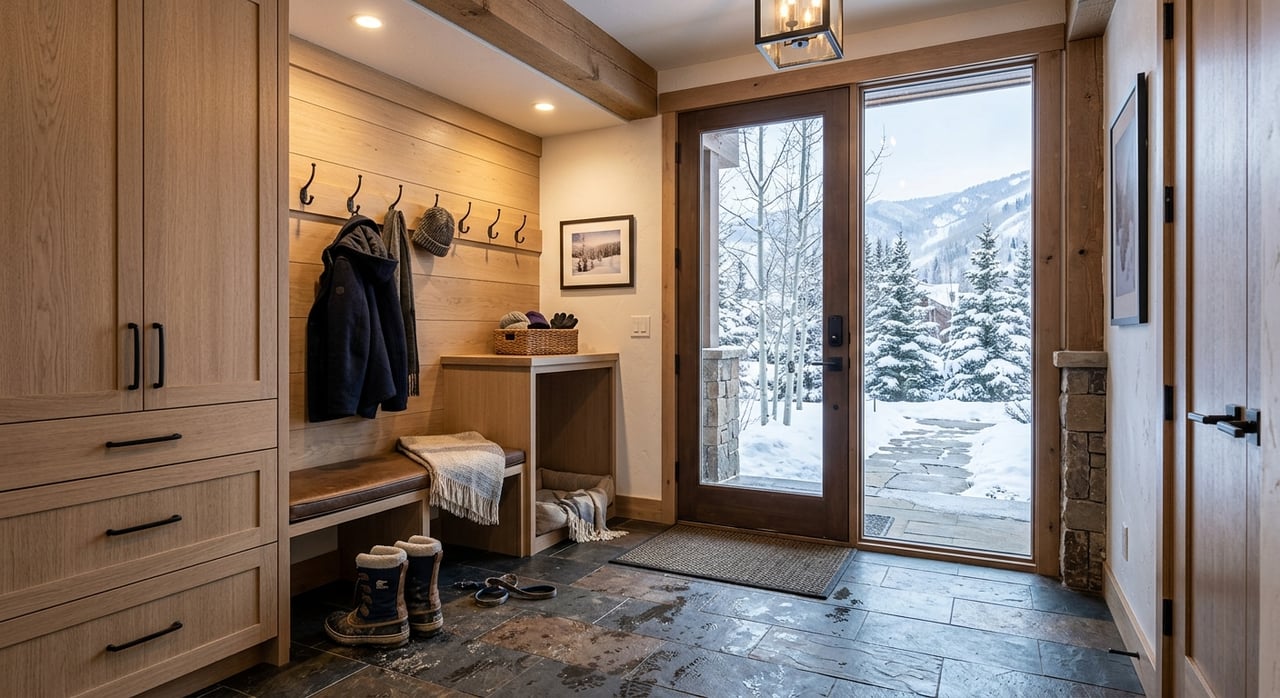
Given Steamboat’s long snowy season, a mudroom or vestibule is one of the most useful spaces in the home. Durable floors, closed boot and ski storage, and a place for wet outerwear can help contain mess and protect the rest of the interior.
These are not local code requirements. They are practical design responses to climate, seasonal use, and the reality of arriving with gear in winter conditions.
Separate owner storage from daily use
If the home will sometimes be used by guests or rented when you are away, clear storage zones become even more important. Lockable owner closets and simple utility access can help cleaners and managers reset the home quickly.
This kind of planning supports smoother turnover and fewer headaches. It also helps the home stay organized between stays.
Keep short-term rental rules in mind
Not every second home is used the same way. If you may rent the property during part of the year, your design and operations should reflect that possibility from the start.
The City of Steamboat Springs says that for short-term rental enforcement, complaints are handled through a hotline and the local responsible party must respond within one hour. The city also notes that buyers of legal nonconforming STRs should request booking records before closing, as outlined on the city’s enforcement and complaints page.
From a design standpoint, that favors homes that are easy to reset, easy to secure, and easy for a local contact to manage. Clear owner storage, predictable utility access, and simple lockup systems all support that model.
Choose water-wise landscaping
Outdoor design matters just as much as the floor plan. In a part-time residence, landscaping should look attractive without demanding constant attention.
That is especially relevant as local water planning continues to balance growth, drought, wildfire, conservation, and supply resilience.
Favor low-irrigation planning
According to Mount Werner Water’s master plan overview, the City of Steamboat Springs and Mount Werner Water are planning for growth, drought, wildfire, Colorado River Compact call scenarios, conservation, and redundant supply.
For homeowners, that makes low-irrigation planting, rain sensors, and water-wise landscape design a smart fit. These choices can support easier ownership while aligning with long-term regional resource planning.
What to prioritize in your Steamboat second home
If you are designing or buying with lock-and-leave living in mind, focus on the features that make ownership simpler in every season.
Here is a practical checklist:
- Durable exterior materials that can stand up to snow and seasonal exposure
- Class A roofing and wildfire-conscious exterior planning
- Defensible space that is manageable during absences
- Easy-to-access shutoff valves and utility areas
- Thermostat settings and insulation strategies that support freeze protection
- Professionally winterized irrigation systems
- Whole-home leak monitoring and water alerts
- Mudroom storage for boots, skis, and wet gear
- Lockable owner storage if guests or renters may use the home
- Low-water landscaping that does not require constant oversight
A well-designed second home should let you spend more time enjoying Steamboat and less time managing avoidable issues.
Whether you are comparing condos, planning a custom build, or looking for a mountain property that works well when you are in town and when you are away, local guidance matters. The The Labor Long Team can help you evaluate homes, neighborhoods, and second-home considerations across Steamboat Springs with a practical, on-the-ground perspective.
FAQs
What makes a home truly lock-and-leave in Steamboat Springs?
- A lock-and-leave home in Steamboat Springs is designed to handle long absences with less maintenance, including freeze protection, durable exterior materials, easy utility access, and practical snow-focused storage.
Why is winterization important for a second home in Routt County?
- Winterization is important in Routt County because Steamboat’s cold temperatures and heavy snowfall increase the risk of frozen pipes, irrigation damage, and water-related repairs when a home sits empty.
What water precautions should second-home owners take in Steamboat?
- Steamboat second-home owners should know their inside shut-off valve location, turn off exterior water, disconnect hoses, blow out irrigation systems, keep the thermostat at 65°F or higher when away, and consider leak-monitoring devices.
How does wildfire planning affect second-home design in Steamboat Springs?
- Wildfire planning affects second-home design in Steamboat Springs by encouraging Class A roofing, ignition-resistant materials, ember-aware venting, and defensible space that can be maintained year after year.
Should a Steamboat second home be designed differently if it may be rented?
- Yes. If your Steamboat second home may be rented, it helps to include lockable owner storage, easy utility access, simple turnover-friendly layouts, and a management plan that aligns with local short-term rental rules.