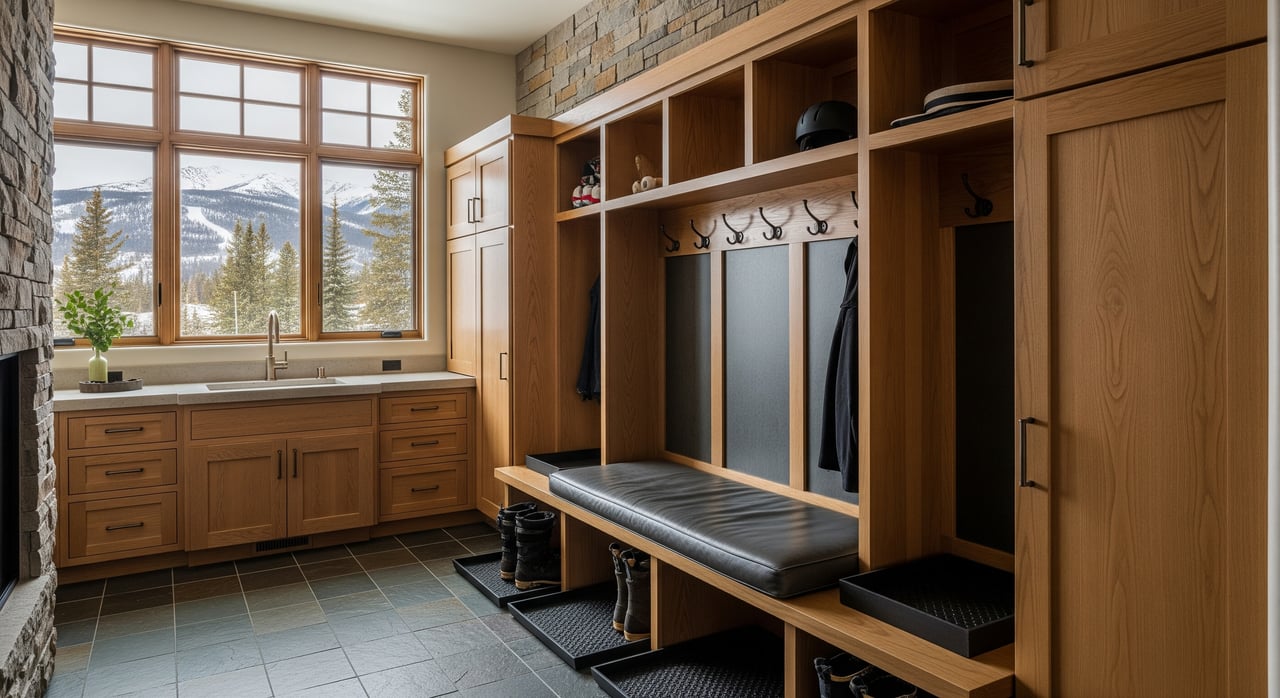
Snowy boots, soggy gloves, and slushy floors are a fact of life in Steamboat. If your entry leaves puddles and clutter, you are not alone. A well-designed mudroom can keep the mess contained, protect your home, and make every ski day or dog walk easier. In this guide, you will learn the key features and local musts for a mountain-ready mudroom that fits Steamboat living. Let’s dive in.
Why Steamboat homes need a real mudroom
Steamboat’s high-elevation winters bring long stretches of snow, frequent melt cycles, and lots of wet gear. Local reporting highlights significant snowfall differences between downtown and the ski area, which means weeks of tracked snow and salt at home. See the context in local climate and snowfall patterns.
Roof slides and ice can also affect entries and walkways. Plan rooflines, canopies, and approaches to avoid drip zones where snow and ice fall. Local authorities publish snow safety advisories about roof loads and ice hazards, which are a good reminder to design for safe, clear access.
Plan your layout by zones
Design your mudroom as a buffer between the outdoors and your living space. A practical entry layout keeps wet gear contained and airflow moving.
Dirty zone at the door
Use heavy-duty mats, a boot tray, and a bench where you can remove outer layers fast. Place hooks for wet shells and a rack for skis or boards so edges and bindings do not sit in puddles.
Drying and conditioning zone
Set up power for boot dryers and space for helmets and gloves to air out. If you can, include a small heat source or radiant floor section here to speed drying and reduce odors.
Storage and organization zone
Create cubbies or full-height lockers for each person. Include shelves for helmets and baskets for smaller items like goggles and socks. Vertical ski or snowboard racks save floor space and keep wet gear off the ground.
Optional service zone
If space allows, add a utility sink or dog wash, a compact laundry pair, and a small gear bench. These extras prevent the rest of your home from becoming a workshop or wash bay.
Size and ergonomics that work
- Keep a clear path of at least 36 inches in front of benches and cubbies. If multiple people suit up at once, 42 to 48 inches is more comfortable.
- Aim for a bench height around 18 inches and a seat depth between 14 and 18 inches so you can put on boots easily.
- Size cubbies 12 to 18 inches wide and 12 to 24 inches deep. For lockers, full height with an upper shelf works well for taller boots and helmets.
Materials that can take a beating
Flooring first
Choose water-resistant flooring that tolerates freeze and thaw plus de-icing salts. Porcelain tile and dense, textured stone are standouts, and some rigid LVT or SPC options are rated for cold climates. See durable choices for entries in this overview of porcelain tile or dense stone.
For slip safety, select tile with a wet DCOF of 0.42 or higher and use textured finishes. Entry mats at the door help too. Learn more about wet DCOF of 0.42 or higher.
Hardware and finishes
Use stainless or corrosion-resistant hooks, racks, and fasteners. Pick washable paints or sealed wood that can handle frequent cleaning.
Drying, heat, and ventilation
- Use dedicated boot dryers sized to your household so liners dry fully between outings. Open shelves or ventilated lockers help airflow.
- Consider radiant floor heating under tile to warm the space and speed evaporation. It is a proven comfort upgrade in heating-dominant climates.
- Add mechanical ventilation or a small exhaust to remove moist air during peak drying. Air gaps around shelves and locker doors improve circulation.
Water management that saves floors
If you plan a dog wash, hose-down area, or expect lots of melt, include a floor drain and finish the floor with a subtle slope to it. The plumbing code calls for trapped floor drains and proper slope when you add these features. Keep thresholds low, but detail transitions so water does not migrate into adjacent rooms.
Winter-proof plumbing and power
Insulate pipes in unheated areas, seal penetrations, and consider heat tape for vulnerable runs. During extreme cold, occupant protocols like minimum thermostat settings and occasional faucet drips can help prevent frozen pipes. Verify electrical circuits for boot dryers and radiant mats, and follow product guidance for high-elevation installations.
Permits, pros, and local fit
In Steamboat Springs, the Routt County Regional Building Department oversees permits and inspections. If your project changes plumbing, electrical, structure, or roofing, check requirements early. Roof canopies and attached entries must be designed to the site-specific ground snow load on the county map. Start at the Routt County Regional Building Department portal and coordinate with local architects and contractors who work in mountain conditions.
Quick homeowner checklist
- Choose a location with room for a bench, storage, and at least 36 inches of clear circulation.
- Divide the room into dirty, drying, storage, and optional service zones.
- Specify porcelain tile or dense stone with a slip-resistant finish, plus robust entry mats.
- Add boot dryers and ventilated storage. Radiant under tile is a high-impact upgrade.
- If you add a sink, dog wash, or hose-down area, include a trapped floor drain and code-compliant slope.
- Use corrosion-resistant hardware and washable finishes.
- Protect pipes from freezing with insulation, sealing, and heat tape where needed.
- Confirm permits and structural needs, including site-specific snow load, before you build.
Ready to tailor a mudroom to your lifestyle or find a home that already has one dialed in? Reach out to The Labor Long Team for local guidance on layouts, materials, and properties that work in every Steamboat season.
FAQs
What makes a mudroom “mountain-ready” in Steamboat Springs?
- It contains snow and salt at the door, speeds drying with heat and airflow, uses durable non-slip flooring, and provides organized storage for ski gear and daily layers.
Do I need a floor drain in a Steamboat mudroom?
- If you plan a dog wash, utility sink, hose-down area, or expect heavy melt, a trapped floor drain with proper slope is recommended and may be required by code.
Is radiant floor heating worth it in a mudroom?
- Yes for comfort and faster drying, especially under tile or stone; radiant is well suited to Steamboat’s heating-dominant climate and cold floors.
What flooring holds up to snowy, salty boots?
- Porcelain tile or dense textured stone are top picks, and select rigid LVT or SPC rated for cold climates can also work in the entry zone.
How should I dry ski boots and gloves?
- Use dedicated boot and glove dryers sized to your household; ventilated shelves and a bit of heat help liners dry fully and reduce odors.
Do I need a permit to add a mudroom or dog wash in Steamboat?
- Plumbing, electrical, structural changes, and roof canopies usually require permits; start with the Routt County Regional Building Department for local requirements.