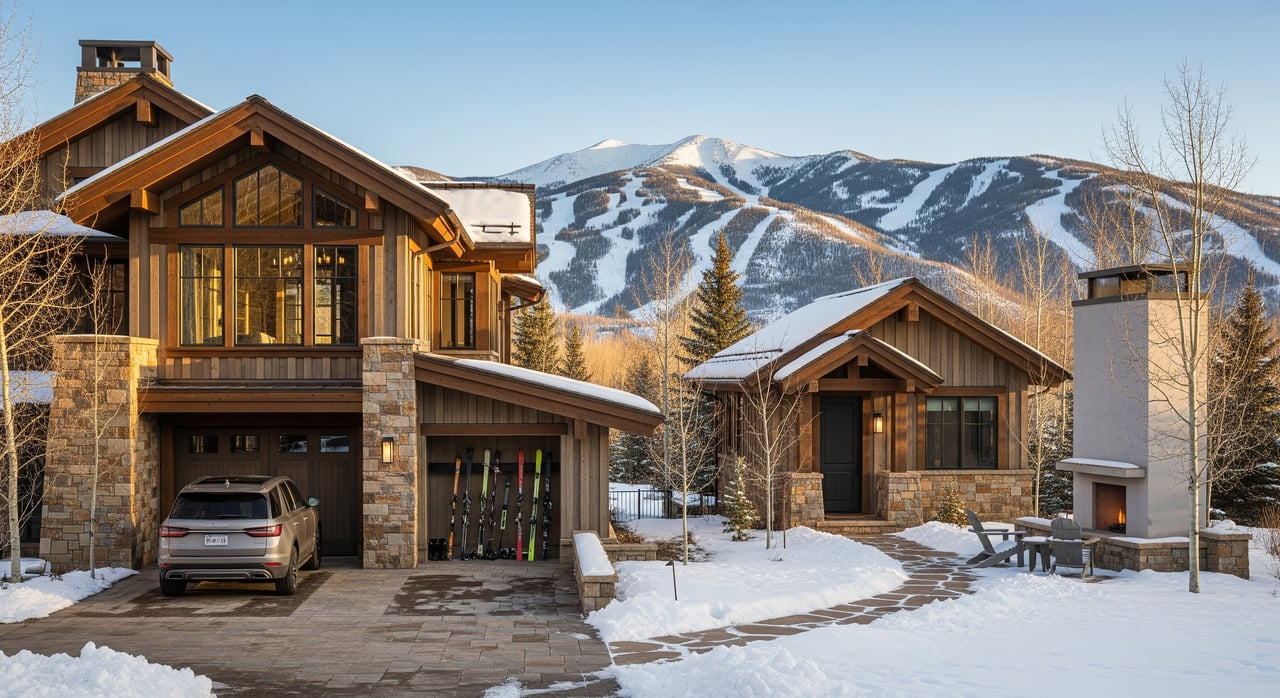
Thinking about a place in Steamboat you can enjoy on weekends, but also wondering if it could help pay for itself? You are not alone. In a resort market like Steamboat Springs, it is common to weigh a second-home loan against an investment loan. Choosing the right path impacts your rate, down payment, taxes, insurance, and even which properties fit your plans. In this guide, you will learn how lenders and the IRS see the difference, what financing looks like in each case, and how local rules and HOAs can affect your decision. Let’s dive in.
Second home vs investment: key differences
How lenders classify use
- Second home: You buy primarily for personal use, not as your main home. You may stay there on weekends or seasonally. Lenders allow second-home financing but use stricter rules than for a primary home.
- Investment property: You buy mainly to produce rental income. This includes long-term rentals and short-term rentals listed on platforms like Airbnb or VRBO.
- Practical overlap: If you plan to rent often, especially as a short-term rental, many lenders and insurers will treat the home as an investment. The way you actually use the property can affect your loan terms.
IRS perspective on use
For taxes, a second home is personal-use property. An investment property is rental property with taxable rental income and deductible expenses, including depreciation. If you convert a second home to a rental, the tax treatment changes at conversion. For rental rules, see the IRS guidance in IRS Publication 527 on residential rental property.
Financing differences to expect
Down payment and programs
- Second homes: Conventional loans often allow around 10 to 20 percent down, sometimes more for condos or higher-risk properties.
- Investment properties: Expect a larger down payment, commonly 15 to 25 percent for a single unit, and often 25 percent or more for multi-unit or non-owner-occupied properties.
- Government loans: FHA and USDA loans are generally for primary residences only. VA loans also have occupancy requirements. Learn the basics in the CFPB Owning a Home resources, and review VA occupancy details at the VA home loans page.
- Portfolio lenders: Local and regional banks that keep loans on their books may be more flexible, but they still tend to require stronger terms for rentals and short-term rentals.
Rates, credit, and reserves
- Rates: Investment loans usually have higher interest rates than primary home loans. Second-home rates typically fall between primary and investment pricing.
- Credit score: Investor loans often require stronger credit, commonly in the mid to high 600s or above. Second homes may have slightly more flexible minimums than investment loans.
- Debt-to-income (DTI): Lenders scrutinize DTI more for investment properties. They may need proof of rental income to count it.
- Reserves: Second homes commonly require around six months of mortgage payments in liquid reserves. Investment properties can require six to twelve months, depending on the lender.
Using rental income to qualify
- Long-term rentals: Lenders may count a portion of signed lease income, often 75 to 100 percent, once properly documented.
- Short-term rentals: Many lenders are conservative. Some only count short-term rental income if it appears on your tax returns for one to two years. Others may allow market rent documentation from a property manager or third-party source. If you plan frequent short-term rental use, expect investment underwriting.
Condos, HOAs, and resort nuances
In ski areas and resort-style communities, condos and mixed-use buildings get extra scrutiny.
- Project approval: Conventional lenders may require condo project approval. High investor concentration, unresolved litigation, or elevated HOA delinquencies can limit financing and raise down payment and reserve needs.
- HOA rules: Rental allowances vary by community. Some allow short-term rentals, some limit frequency, and some prohibit them. Your HOA rules influence both lender eligibility and your projected rental cash flow.
- Resort context: Steamboat has a mix of downtown condos, ski-area developments, and mountain cabins. Properties inside resort settings may see stricter lender overlays. Get clarity before you make an offer.
Taxes, insurance, and STR rules
Federal tax basics
- Second home: Treated as personal-use property. Mortgage interest and property tax may be deductible within federal limits. Ask your tax advisor about current thresholds.
- Investment property: Rental income is taxable. Many operating expenses may be deductible against rental income, and residential rental property can be depreciated over 27.5 years. The IRS explains these rules in Publication 527.
- Conversions and 1031: Converting a second home to a rental changes tax treatment. The primary residence capital gains exclusion generally does not apply to second homes or investments. A 1031 exchange may defer gains on property held for investment, not for personal-use second homes. Work with a CPA to plan timing and documentation.
Local taxes and permits
Colorado taxes rental income at the state level, and property taxes are assessed by the county. Short-term rentals may require lodging and sales tax registration and remittance. Rules differ between the City of Steamboat Springs and unincorporated Routt County. Check current registration, rates, and permitting with local authorities. Start with the City’s site at steamboatsprings.net, then confirm whether a property falls under city or county jurisdiction before assuming anything.
Insurance for second vs STR
- Second home: A standard homeowners policy is typical, but your insurer needs to know your occupancy patterns.
- Investment or STR: Landlord or commercial coverage is often required. Many standard policies exclude short-term rental activity. Consider higher liability limits, loss-of-rent coverage, and an umbrella policy. Mountain properties can face special hazards like snow load and guest wear, so verify coverage details with your lender and insurer.
Steamboat market considerations
Steamboat Springs is a mountain resort community with strong seasonal demand. Winter ski season and summer recreation drive peak occupancy and nightly rates. Off-season periods can be slower. This seasonality affects cash flow planning and your choice of financing. Inventory can include ski-area condos, downtown residences, and mountain homes at higher price points than many non-resort markets. These characteristics make preapproval and conservative pro formas essential.
Decision checklist for buyers
Use this simple checklist to clarify your path.
- Define use: Will you primarily use the property yourself, or is income the main goal? If you plan frequent rentals, especially short term, expect investment financing.
- Pre-underwrite: Get preapproved with a lender that understands resort markets and short-term rentals. Ask how they treated any projected rent in your preapproval.
- Verify rules: Confirm short-term rental regulations, lodging tax registration, and whether the home is inside city limits or in the county. Check HOA and CC&Rs for rental limits or prohibitions.
- Budget for terms: Be ready for a larger down payment and higher reserve requirements for investment loans compared to second homes.
- Model cash flow: Build a conservative pro forma that accounts for seasonality, average nightly rate, occupancy, management fees, utilities, repairs, taxes, insurance, HOA dues, and capital reserves.
- Tax planning: Speak with a CPA about depreciation, passive activity loss rules, state income tax, and any plan to convert the property or pursue a 1031 exchange in the future.
- Insurance quotes: Compare homeowner, landlord, and STR policy options. Confirm any lender requirements.
- Condo due diligence: If buying a condo, confirm project approval status, owner-occupancy ratios, litigation, and delinquency rates early.
- Exit strategy: Decide whether you plan to hold long term, convert between personal use and rental, or resell. Financing and tax outcomes can change with each path.
Work with a local team
Choosing between a second-home loan and an investment loan in Steamboat is about aligning financing with how you will actually use the property. The right plan can improve your rate, reduce surprises with HOAs and insurance, and set you up for clean tax reporting. If you want guidance on property selection, rental feasibility, 1031-aware strategies, and local lender introductions, connect with The Labor Long Team. We combine deep local knowledge with hands-on service to help you make a confident move.
FAQs
What down payment do I need for a second home in Steamboat?
- Conventional second-home loans often allow around 10 to 20 percent down, though condos or higher-risk properties may require more.
Are investment loan rates higher than second-home rates?
- Usually yes. Investment financing is typically priced higher than second-home financing, which is usually higher than primary residence rates.
If I rent on Airbnb a few times a year, will lenders treat it as an investment?
- Often yes. Frequent or advertised short-term rental use commonly triggers investment property underwriting and pricing, even if you use the home personally.
Can I use projected short-term rental income to qualify for the mortgage?
- It depends on the lender. Many require tax return history for STR income, while some may accept third-party market rent data. Expect conservative treatment.
How do Steamboat and Routt County handle STR permits and taxes?
- Rules vary by jurisdiction. Confirm registration, permitting, and lodging or sales tax requirements with the City of Steamboat Springs or Routt County before you buy.
Are ski-area condos harder to finance?
- They can be. Lenders often require condo project approval, and high investor concentration or litigation can limit loan options or increase down payment needs.
What reserves and credit score do lenders expect for an investment loan?
- Many lenders want six to twelve months of mortgage payments in reserves and stronger credit, often in the mid to high 600s or above.
Does converting a second home to a rental change my taxes and insurance?
- Yes. Rental use triggers different tax rules, including depreciation, and often requires a landlord or STR insurance policy. Inform your lender and insurer before converting.