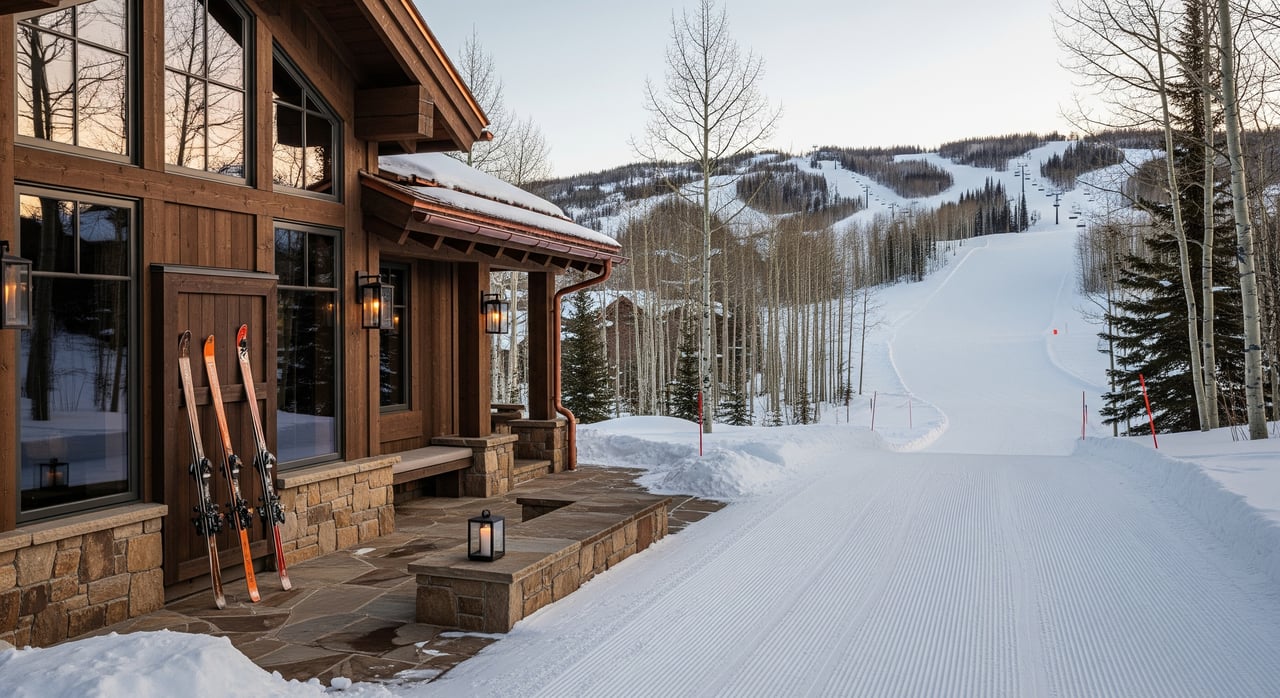
Is stepping out your door and clicking into your skis in the morning a must-have for your Steamboat home? You are not alone. In a mountain market like Steamboat Springs, the words “ski-in/ski-out” carry real weight for lifestyle, convenience, and rental potential. But not every listing that uses the term means the same thing. In this guide, you will learn what ski-in/ski-out really means here, how to verify access, and what to watch for in title, HOA, and resort policies. Let’s dive in.
What ski-in/ski-out means
Not all ski access is equal. Understanding the spectrum helps you compare properties with confidence.
True ski-in/ski-out
This is the gold standard. True ski-in/ski-out means a door, stoop, or steps open directly to a maintained trail or lift access point. You can ski out from the property and return on skis without using a shuttle or vehicle. No walking across parking lots. No reliance on a long path.
Functional ski access
Many Steamboat condos and homes offer functional ski access. You reach a trail or lift via a short walkway, steps, or a resort path. You may cross a small service road or plaza. It is still convenient, but it is not the same as opening your door onto a groomed run.
Near slopes or ski access
Terms like “close to slopes” or “ski access” usually mean you are within a short drive or can use a resort shuttle. These locations can be great, but they are not ski-in/ski-out in the strict sense. When a listing sounds vague, plan to verify the actual route.
How it works in Steamboat
Ski access in Steamboat has unique patterns tied to Mount Werner, the base area, and mountain neighborhoods.
Mountain layout and corridors
The primary ski mountain is the Steamboat Ski Area on Mount Werner. Properties marketed as ski-in/ski-out cluster around the base area, along lift corridors, and in mountain neighborhoods that touch groomed trails. You will see buildings with steps to the gondola plaza, townhomes beside trailheads, and single-family homes with slope frontage or deeded easements to marked runs.
Property types you will see
- Condominium complexes next to base-area lifts or the gondola plaza
- Townhome clusters with direct paths to trailheads
- Single-family homes on or beside groomed trail corridors, sometimes with recorded ski easements
- Fractional or resort-managed units in larger lodges with on-site amenities
Seasonality and snow behavior
Steamboat’s snow season varies by elevation and weather. Some lower access points rely on snowmaking and grooming. Early and late season access may differ from midwinter conditions. Ask whether a route depends on natural snow or snowmaking and whether the resort maintains the segment you will use.
Value and rental impact
Ski-in/ski-out convenience is scarce in Steamboat, and scarcity drives value. Closer, clearer access usually brings higher sale prices and stronger rental appeal.
Premium drivers
- Proximity to lifts and marked trails
- Recorded ski easements or deeded rights of way
- View orientation, especially south or west exposures
- Building amenities like ski lockers, heated walkways, and ski valet
- Ownership type and HOA strength
- Ability to rent short-term under current local rules
Amenities that matter
Small features add up. Ski lockers, heated boot rooms, grooming reliability, and on-site management can make ownership easier and improve rental performance. Walkways that receive sun can reduce ice buildup, while covered entries can limit roof-shed issues on storm days.
Legal and access checks
Before you buy, confirm how ski access is created and controlled. The difference between deeded rights and permissive use affects both daily enjoyment and long-term value.
Deeded access vs permissive use
Deeded access is stronger. Look for recorded easements or rights of way on county plat maps and title documents. Some routes exist by written agreement with the resort or a private landowner. Those can change if policies change. Ask for copies of any written agreements that govern crossings or signage.
HOA rules to review
Many slope-side associations have rules around ski storage, guest parking, noise, and rentals. Some HOAs restrict short-term rentals or set minimum stays. Review HOA minutes, budgets, reserve studies, and any special assessments. Confirm who handles snow removal, how costs are shared, and where snow can be piled.
Resort crossings and liability
If your route crosses resort-controlled terrain, the resort may set policies for crossing points, closures, and safety. Clarify who is responsible for signs or barriers and how liability is handled. If guests use the access route, confirm coverage with your insurer.
Short-term rental rules
Steamboat Springs and Routt County regulate short-term rentals with licensing and other requirements. Rules can change. Before relying on rental income, confirm the current municipal code and any permits or occupancy limits required for your address.
Buyer due diligence checklist
Use this simple checklist to prove that a property’s ski access matches your expectations.
- Physical route
- Ski or walk the path between the door and the nearest maintained trail or lift during typical winter conditions.
- Ask whether the route is groomed and whether snowmaking is needed in early or late season.
- Title and easements
- Order a title report and county plat map.
- Confirm any recorded ski easements, rights of way, or restrictions related to crossing private property.
- Resort and written agreements
- Request copies of any resort agreements governing your access.
- Confirm if a lift ticket or resort pass is required to use the route.
- HOA and building health
- Review CC&Rs, rental policies, parking rules, pet rules, and recent board minutes.
- Ask for reserve studies, planned capital projects, and snow removal responsibilities.
- Safety and terrain
- For homes near steep, open slopes, consult avalanche hazard resources and look for engineered mitigation where relevant.
- Note roof design, snow-shed areas, and ice dam prevention measures.
- Utilities and roads
- Verify year-round road maintenance and who plows, whether public or private.
- Confirm access for service vehicles and snow storage locations.
- Insurance and costs
- Get quotes for coverage that contemplates snow load, freeze protection, and liability for guest access routes.
- Ask about prior claims history for the building or unit.
- Rental viability
- Confirm current local STR rules and licensing steps.
- Review any available historical rental performance for comparable units.
Seller tips for ski access homes
If you are preparing to sell a ski-in/ski-out property, proof and clarity make a difference.
- Map the route. Provide a simple route map and note grooming details.
- Gather documents. Include recorded easements, resort agreements, HOA rules, and recent minutes.
- Prepare systems. Service heating, insulation, and roof systems to show well in winter.
- Stage for skiers. Highlight ski lockers, boot rooms, and drying areas. Make paths clear and safe on showing days.
Risk and insurance basics
Mountain homes have unique exposures. Higher snow loads, freeze risk, and roof-shed patterns can affect premiums and maintenance. If your access route involves guests, ask your insurer about liability and any endorsements that apply to private trails or crossings. For hillside or open terrain locations, review local guidance on avalanche exposure and confirm whether mitigation exists or is needed.
Getting here and around
Most out-of-area owners arrive via Yampa Valley Regional Airport near Hayden or through Denver International Airport, then drive or book ground transfers. If your property is not directly on a run, local transit and resort shuttles can make access convenient. Just note that reliance on a shuttle is not the same as ski-in/ski-out.
Work with local experts
The difference between true ski-in/ski-out and marketing language can be a few steps, a recorded easement, or a seasonal policy. You deserve a process that verifies every detail, from trail grooming to title. The Labor Long Team blends deep local knowledge with responsive service to help you target the right buildings and neighborhoods, confirm access in writing, and compare value-driving amenities and rental potential.
Ready to explore the best ski-access homes and condos in Steamboat? Start Your Steamboat Search with The Labor Long Team and get a curated, fact-checked shortlist tailored to your goals.
FAQs
What does true ski-in/ski-out mean in Steamboat?
- It means you can ski from your door to a maintained trail or lift and return on skis without a shuttle, vehicle, or long walk.
How can I verify ski access before buying?
- Traverse the route in winter, review the title report and county plat for recorded ski easements, and request any written resort agreements.
Do I need a lift ticket to use my access route?
- Often yes when your route connects to resort-controlled terrain. Deeded private trails that bypass resort control are uncommon, so confirm requirements in writing.
Why do ski-in/ski-out homes cost more?
- Scarcity, convenience, and rental appeal drive premiums, especially for properties very close to lifts with deeded access and strong amenities.
What HOA rules could affect my use or rentals?
- Associations may regulate ski storage, guest parking, noise, and short-term rentals, sometimes with minimum stays or licensing requirements.
What hidden costs should I plan for as an owner?
- Expect higher insurance for mountain exposure, dedicated snow removal, building maintenance for freeze protection, HOA fees, and potential special assessments.
What if the ski route crosses resort property?
- The resort may control crossing points, seasonal closures, and signage. Confirm policies and liability responsibilities before you buy.